
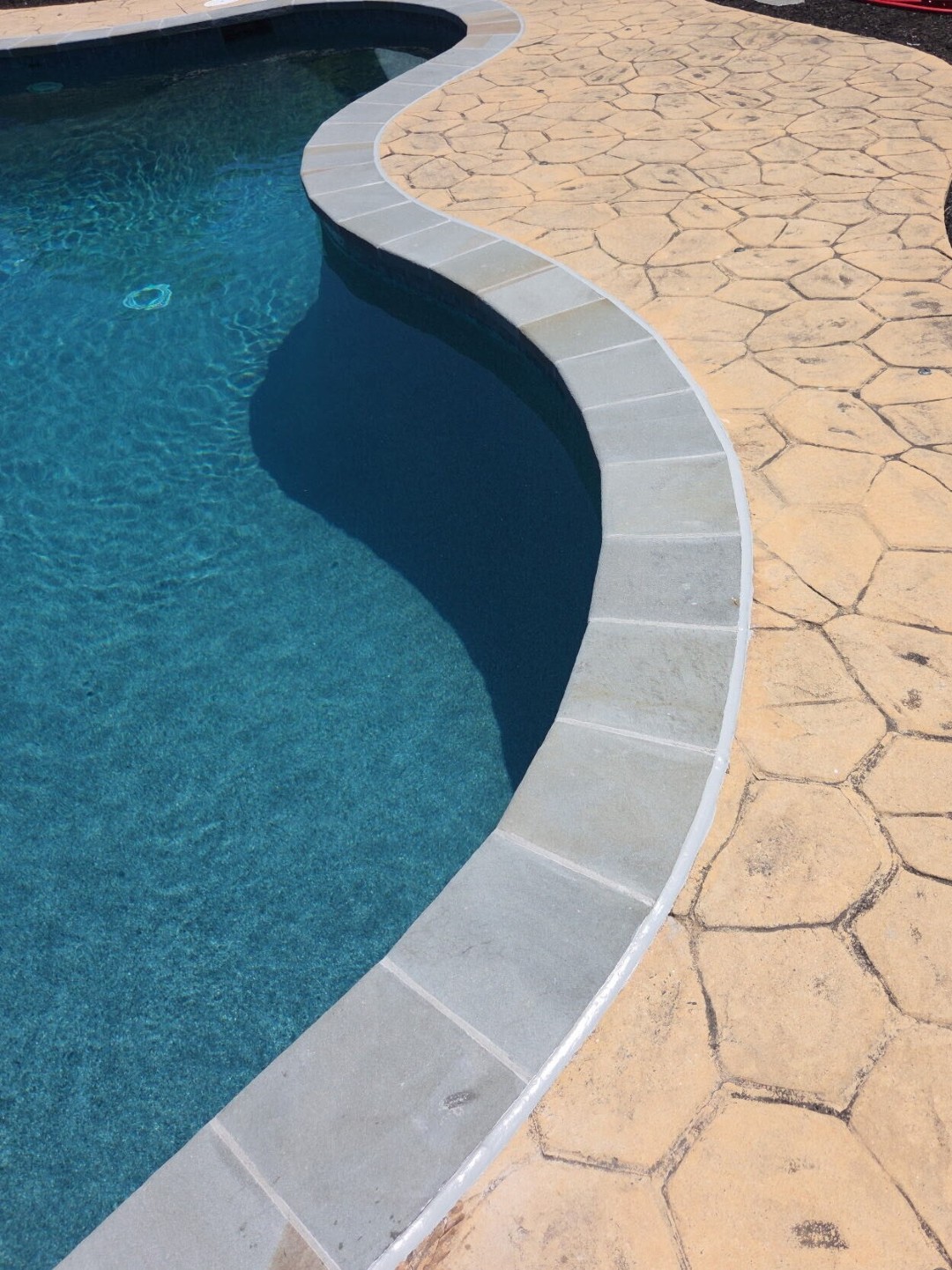
It often starts small—a loose tile at the waterline. Then you spot a crack in the coping. Before long, you notice the plaster looks rougher than you remembered.
What seemed like a simple repair suddenly involves a lot more than you planned for.
The good news is that pool tile, coping, and plaster don’t automatically have to be replaced together. But if pool tile and coping replacement is already on your mind, it’s worth having the plaster checked before you decide how much work to actually do.
 Coping is the finished edge that caps the top of a concrete pool. Cracked or loose sections can indicate failing mortar or deterioration beneath the coping. A professional inspection can show whether the damage is limited to the coping or extends beneath it.
Pool and Spa News notes that movement around the bond beam can loosen, crack, or separate coping and waterline tile, which is one reason recurring damage may point to a problem beneath the visible finish.
The condition of each finish matters, but so does its age and repair history. A pool may have coping that still looks sound even though it was installed at the same time as tile that has started failing. In another pool, the plaster may have been resurfaced five years ago, while the original tile and coping are decades old.
That history can change the scope of the project.
Before recommending either pool tile replacement or pool coping replacement as a standalone project, a contractor should consider how much useful life the adjoining finishes are likely to have left. If one surface needs work now and another appears likely to follow soon, coordinating pool tile and coping replacement with resurfacing can help avoid another round of draining, demolition, and finish work a few years later.
The same thinking applies during a larger pool renovation. The decision should come down to condition, age, and remaining service life—not simply whether other work is already underway.
Woodfield’s pool remodeling guide and pool coping guide go into more detail about finish and material options.
 Even when you don’t need to replace everything, the sequence still matters.
Coping sits directly above the waterline tile, which meets the interior finish below. Removing one surface can affect the material next to it. Install brand-new tile today, for example, and some of that work could be disturbed later if deteriorated coping has to come out.
AQUA Magazine explains that tile, coping, and interior finishes are closely connected during pool renovation work. Some resurfacing projects can leave the existing tile and coping in place, while others involve replacing several components together.
Demolition can also uncover deteriorated mortar, a weakened substrate, or damage around the bond beam—the reinforced concrete edge beneath the coping. Planning pool tile and coping replacement around the condition of adjoining surfaces can reduce the chance of recently completed work being disturbed later.
 There’s no single cost to replace pool tile and coping because the final price depends on the pool and the scope of the work.
Pool size affects how much material and labor are required. Site access can make demolition and material handling more difficult. Finish selections also affect the budget, while problems uncovered after the existing materials are removed can add work that wasn’t visible beforehand.
Completing related work together may reduce repeated setup, draining, and demolition costs. But replacing a finish that’s still in good condition simply because another surface needs work may not make financial sense.
By fall, most Maryland homeowners aren’t using their pools as often, which makes the off-season a practical time to assess aging finishes without giving up prime swimming days.
That gives you time to figure out what work is actually needed and make finish decisions well before the next pool season begins. It also reduces the chance of being surprised by a larger problem in spring, right when you’re ready to start using the pool again.
If pool tile and coping replacement is already on your radar, fall is a smart time to have the plaster and surrounding surfaces checked too.
Woodfield Outdoors’ design showroom in Fallston allows homeowners to compare tile, coping, and finish options in person rather than making major design decisions from a screen.
Woodfield has worked with Maryland homeowners since 1990, guiding projects from the first conversation through construction. That means you get a team that can look beyond the most obvious damage and evaluate how the pool’s finishes, underlying surfaces, and renovation work should be coordinated.
Contact Woodfield Outdoors to schedule a consultation or visit the Fallston showroom to start planning your project.
We proudly serve Maryland in the following areas: Anne Arundel County, Baltimore City, Baltimore County, Carroll County, Cecil County, Harford County, Howard County, and Montgomery County. We also serve Southern Pennsylvania and Washington, DC.
MHIC: #121071
PA HIC: #161902
D.C. General Contractor License: #410524000656
© 2026 Woodfield. All Rights Reserved.